
Why ‘We’re Aligned’ Is a Risky Assumption
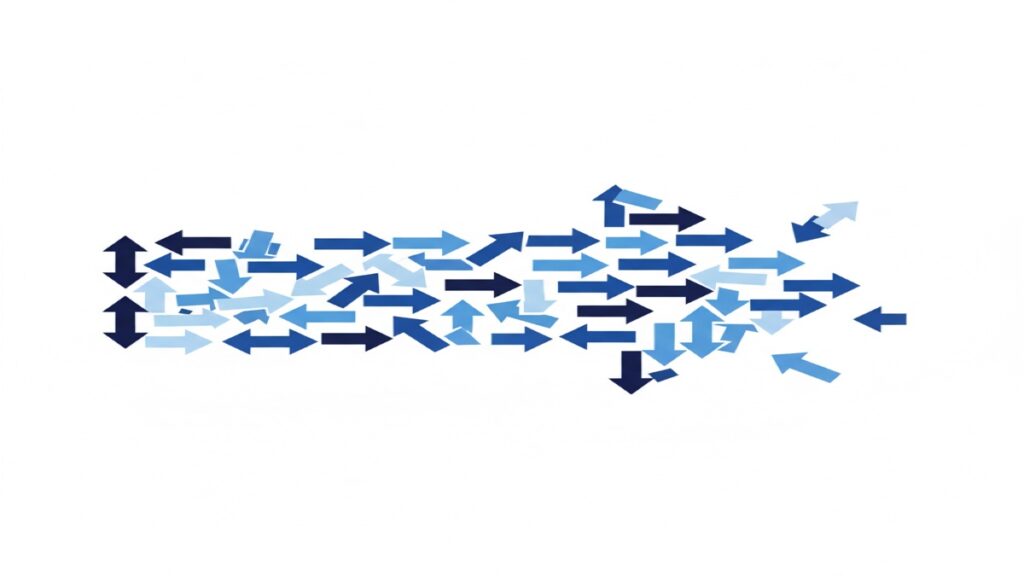
Most leadership teams believe they are aligned because they are not openly fighting. That is a low bar.
Real alignment shows up as speed. Fewer meetings. Cleaner execution. Less rework. More trust under pressure.
Here are six questions high-performing teams revisit quarterly. Not because they are insecure. Because alignment decays. It always does.
1) What Are We Trying to Make True This Quarter?
Not tasks. Outcomes. If you cannot say the outcome in one sentence, you will get competing interpretations.
The test: can each leader on the team articulate the same outcome without looking at notes? If not, alignment is an assumption, not a reality.
2) What Are We Not Doing, On Purpose?
Tradeoffs create focus. Without tradeoffs, you do not have priorities. You have wishes.
Explicit tradeoffs protect the team from scope creep and from the guilt of saying no. When tradeoffs are documented, defending focus is easy. Without them, every new request feels like a failure to accommodate.
3) Who Owns Each Outcome, and What Does “Done” Mean?
If ownership is shared, execution is diluted. If “done” is vague, you will debate forever.
Shared ownership often means no ownership. Someone has to be the decider. And “done” cannot be “I’ll know it when I see it.” Define measurable completion criteria before starting.
4) What Decisions Are Already Made, and Which Are Still Open?
Teams waste time when decisions feel reversible. Capture what is decided and why.
A decision log prevents reopens. It also creates institutional memory. When new people join, they can understand the rationale for current approaches rather than proposing changes that were already considered and rejected.
5) What Does Our Meeting Cadence Need to Produce?
Meetings should be an instrument. If a meeting does not produce decisions, clarity, or coordination, it is overhead.
For each recurring meeting, name the output. If you cannot, consider whether the meeting should exist. Most teams have at least one meeting that persists from inertia rather than value.
6) What Is the One Friction We Will Not Tolerate This Quarter?
This is the leadership standard that protects everything else. It might be reopen behavior. It might be missed handoffs. It might be scope creep.
One friction. Not ten. Picking one creates focus. It also creates permission to call it out when it happens. “We agreed this quarter: no reopening decisions without new information.”
The Coaching Move
If you want alignment without relying on personality or optimism, you need a shared measurement. A recurring assessment that creates the same conversation every quarter, even when things are busy.
Alignment is not a feeling. It is a system. Systems require maintenance. Teams that assume alignment is permanent end up paying the alignment tax—in rework, in meetings, in frustration—over and over.
Alignment Baseline (6-Question Self-Score)
Score each item 0, 1, or 2.
0 = unclear. 1 = somewhat clear. 2 = crystal clear.
- Our quarterly outcomes are unambiguous.
- Our tradeoffs are explicit.
- Ownership and “done” definitions are documented.
- Decision rationale is captured and easy to find.
- Our meeting cadence produces outcomes, not noise.
- We have one visible friction standard for the quarter.
10-12: Your alignment infrastructure is strong. Maintain the cadence.
6-9: Partial alignment. Identify the lowest-scoring area and address it this quarter.
0-5: Alignment is aspirational. Start with question 1: What outcome are you trying to make true?